




BLOG
- ELİTE WORLD HOTELS & RESORTS
- BLOG
- WHAT YOU NEED TO KNOW ABOUT GÖBEKLİTEPE, THE SİTE THAT REWROTE THE HİSTORY OF HUMANİTY
What You Need to Know About Göbeklitepe, the Site That Rewrote the History of Humanity
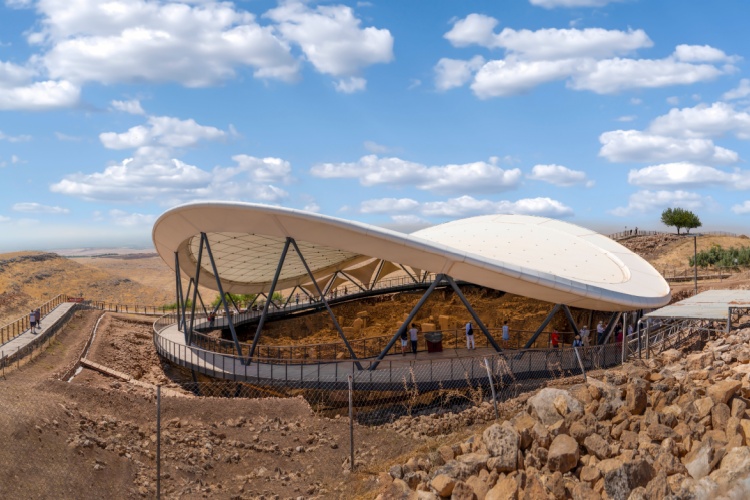
The archaeological site of Göbeklitepe was added to the UNESCO World Heritage Tentative List in 2011. The reason for this recognition lies in the extraordinary nature of its discovery, because this place profoundly transformed everything previously believed about the history of humanity, the origins of religious thought, and the transition of human beings into settled communal life. Reaching back to approximately 10000 BCE, the story of Göbeklitepe has continued to challenge long established historical assumptions through ongoing archaeological research that has been carried out since 1995. In this text, we have gathered together the essential information that you should know about this remarkable location that compelled humanity to rethink its own past. Here is what you need to know about Göbeklitepe.
Also, do not forget to read this article as well Güneydoğu Gezilecek Yerler (Places to Visit in Southeastern Anatolia)
Where is Göbeklitepe located?
Göbeklitepe is located within the provincial borders of Şanlıurfa, approximately 20 kilometers to the northeast of the city center, near the Örencik Village. Rising around 760 meters above sea level, this elevated hill draws attention due to its commanding view over the surrounding plains.
Thanks to this strategic position, the area served as a gathering point for various communities throughout history. Today, the site can be visited with the support of a modern visitor center and walking paths.
The earliest and largest known temple
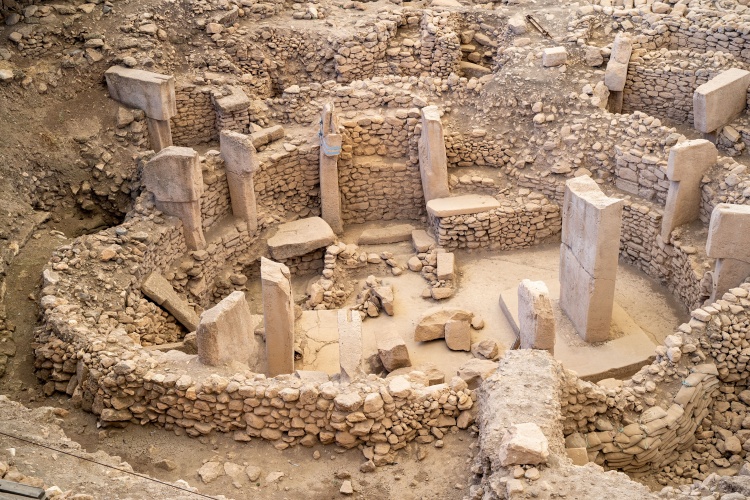
Göbeklitepe is widely accepted as the oldest known center of belief on Earth. Archaeological surveys have identified around 20 circular and oval shaped temple structures within the site, although only 6 of them have been fully uncovered so far.
Inside each temple stand enormous stone pillars shaped like the letter T, reaching heights of 3 to 6 meters. These monumental pillars are believed to symbolize human figures and to represent a structured ritual order.
7500 years older than the Egyptian pyramids
With a history that stretches back more than 11.000 years, Göbeklitepe belongs to the A phase of the Neolithic Age. It is understood that the ceremonial structures in the region were constructed by late hunter groups who were already closely connected to the beginnings of agriculture and animal domestication.
Archaeological excavations in the region began in 1995
Göbeklitepe was first identified in 1963 during the Southeastern Anatolia Prehistoric Research Project, conducted jointly by İstanbul Üniversitesi and the University of Chicago. However, the true significance of the site was revealed in 1994 through the work of Klaus Schmidt from Heidelberg University, whose research uncovered the monumental character of the area. Formal excavation efforts began one year after this pivotal discovery.
Relief carvings of animals
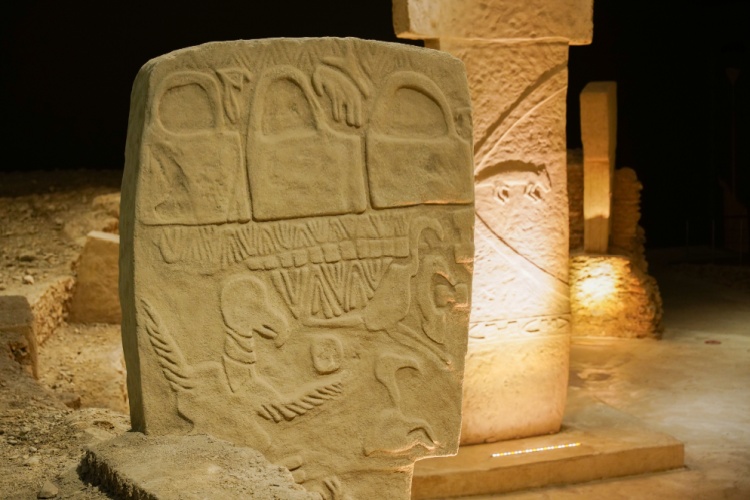
The stone pillars at Göbeklitepe are decorated with rich relief carvings that reflect how people of the time perceived and interpreted the natural world. The most frequently depicted figures belong to wild animals.
Scorpions, snakes, foxes, wild boars, lions, cranes, and wild ducks appear either individually or together in compositions that seem to tell symbolic stories. These figures are believed to carry mythological meanings and to be closely connected with ritual practices.
The earliest wheat
Scientific studies indicate that the ancestor of wheat, one of the most important cultivated plants in human history, grew naturally in this region. The discovery of einkorn grains, a wild form of wheat found in the soil of Göbeklitepe, provides strong evidence for this claim. Other plant remains identified in the area include wild varieties of almond and peanut.
The construction of the sanctuary
During the period when Göbeklitepe was built, people lived in small groups that survived by gathering plants and hunting animals. For the construction of Göbeklitepe, these groups likely came together in unprecedented numbers. The reason for that is massive stone pillars and heavy blocks were transported from rocky areas that were located 2 kilometers away, carried entirely by human effort without the use of wheeled vehicles or pack animals.
The belief of nomadic communities transitioned into settled life through agriculture has changed
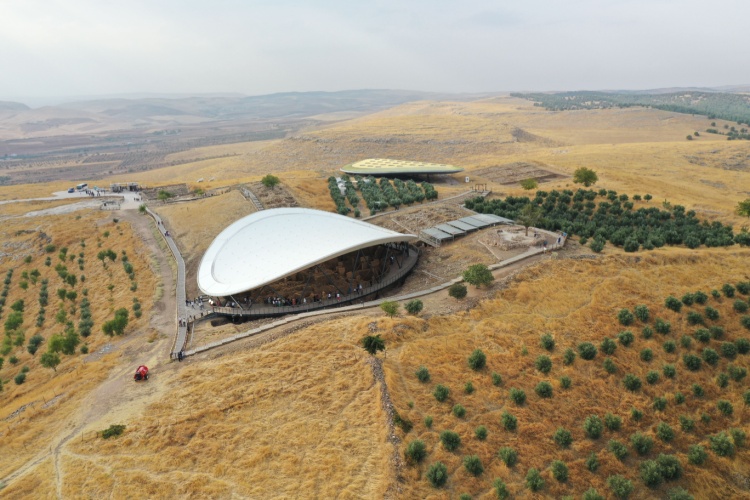
Most of us have heard the same explanation repeatedly in history lessons: nomadic communities learned agriculture and then transitioned into settled life. Research conducted at Göbeklitepe completely overturned this long held assumption. Based on his findings, archaeologist Schmidt proposed that hunter gatherer communities first came together regularly at religious centers like Göbeklitepe and gradually adopted a settled lifestyle as a result. In other words, what truly encouraged human beings to remain in one place was the desire to stay close to sacred spaces and shared spiritual centers