Plan Your Southeastern Anatolia Trip: Diyarbakır Hotel Guide
With its deep-rooted historical heritage, captivating flavors and mystical atmosphere, the Southeastern Anatolia Region welcomes thousands of visitors every year. Diyarbakır is undoubtedly one of the most captivating destinations for those who journey to the heart of a unique culture.
Diyarbakır, where walls and inns, mosques and churches intertwine, bears a trace of history in every corner. The Diyarbakır city walls, which are inscribed on the UNESCO World Heritage list, the Dicle River, also under UNESCO protection and the Grand Mosque, one of the five sacred sanctuaries of Islam, are among the most magnificent structures of Diyarbakır. Would you like to learn more about Diyarbakır? Let's take a look at what you can find and visit in Diyarbakır, a city that you should definitely add to your travel plans.
A History of Approximately 12,000 Years
Archaeological excavations have revealed that the history of Diyarbakır dates back to the Paleolithic Age and the Mesolithic Age. Cave settlements are known to have existed in and around Diyarbakır during these periods. For example, research conducted on Çayönü Hill, one of the major settlements in the city, has identified the world's oldest village. Research shows that the people living on Çayönü Hill were formerly nomadic.
World-Famous Walls in Diyarbakır!
Diyarbakır Walls are one of the most well-known and visited landmarks in the city. These walls, which are approximately 5,200 meters in circumference, have 19 bastions in the Inner Castle and 82 in the outer walls. The height of the bastions generally varies between 8 and 22 meters. These bastions were designed for defensive purposes.
In the past, the ground floors were used as storage, while the upper floors housed soldiers. When you visit, you will notice that the space increases in size as you move up the stairs. In fact, if you examine the walls more closely, you may notice symbolic figures such as scorpions, humans, mountain goats and deers. These walls, which have circular, rectangular, or polygonal plans, are among the most important symbols in Diyarbakır.
The Origin of the Name Diyarbakır
The oldest known name for Diyarbakır province appears in Assyrian sources as "Amidi." In Latin and Greek sources, it is possible to see the name "Amida" or "Amido." While there are various accounts of the origin of the name "Amidi," it is not possible to give a definitive reason.
During the Islamic period, the city acquired the name "Amid" and remained known by this name until the 17th century. During the Ottoman Empire, some referred to the region as "Kara Amid." In later years, the Bekr tribe, which settled in the region during the Arab raids, began to refer to the region as Diyâr Bekr or Diyâr-ı Bekr. It was officially named Diyarbakır in 1937.
A New Grasshopper Species Found in Diyarbakır!
Diyarbakır has made a name for itself worldwide by contributing to the scientific world, in addition to its deep-rooted cultural heritage. A unique species of grasshopper was spotted by locals in the Dicle district. Scientific research revealed that this species had never been seen or recorded before.
This grasshopper species, discovered for the first time in the Southeastern Anatolia Region, is also featured in a scientific journal published in Germany. The creature was named "troglophilus diclensis" because it was seen in the Dicle district.
To Make Your Diyarbakır Discovery Meaningful: Elite World Comfy Diyarbakır
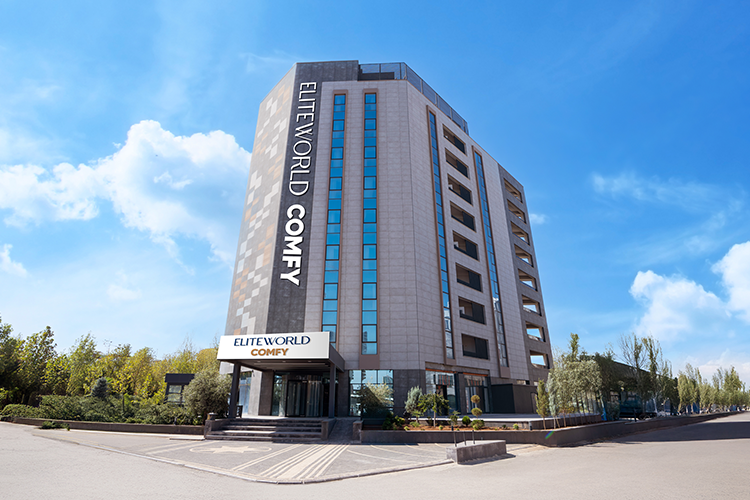
Elite World Comfy Diyarbakır, the newest member of the Elite World Hotels & Resorts chain, will welcome guests in 2025. Located 6 kilometers away from Diyarbakır Airport and 8 kilometers from the city center, the hotel features 77 modern and comfortable rooms.
Elite World Comfy Diyarbakır is ready to serve you in Diyarbakır with a relaxing spa area that will make your holidays truly enjoyable and a restaurant that offers delicious flavors that will linger on your palate. Ideal for both cultural and business trips, the hotel offers a wide range of amenities that you will need. Promising privileged comfort, Elite World Comfy Diyarbakır is poised to become your new home in the city!
BOOK NOW