







BLOG
- ELİTE WORLD HOTELS & RESORTS
- BLOG
- Museums That You Can Visit to Keep the Memory of Atatürk Alive on August 30 Victory Day
Museums That You Can Visit to Keep the Memory of Atatürk Alive on August 30 Victory Day
The years 1919-1923 were an important turning point in the struggle for independence of Turkey and a great struggle was fought on the Western front of the War of Independence. The Great Offensive, which began on August 26 to prevent the Greek army from gaining victory and to reclaim the lost lands, resulted in the final Turkish victory. As we enter the 102nd year of the liberation of Anatolia from Greek occupation, we have compiled the museums that you can visit on August 30. Let's check out the museums that you can visit to keep the memory of our country's founder, Gazi Mustafa Kemal Atatürk and the Turkish army alive.
Anıtkabir, Ankara
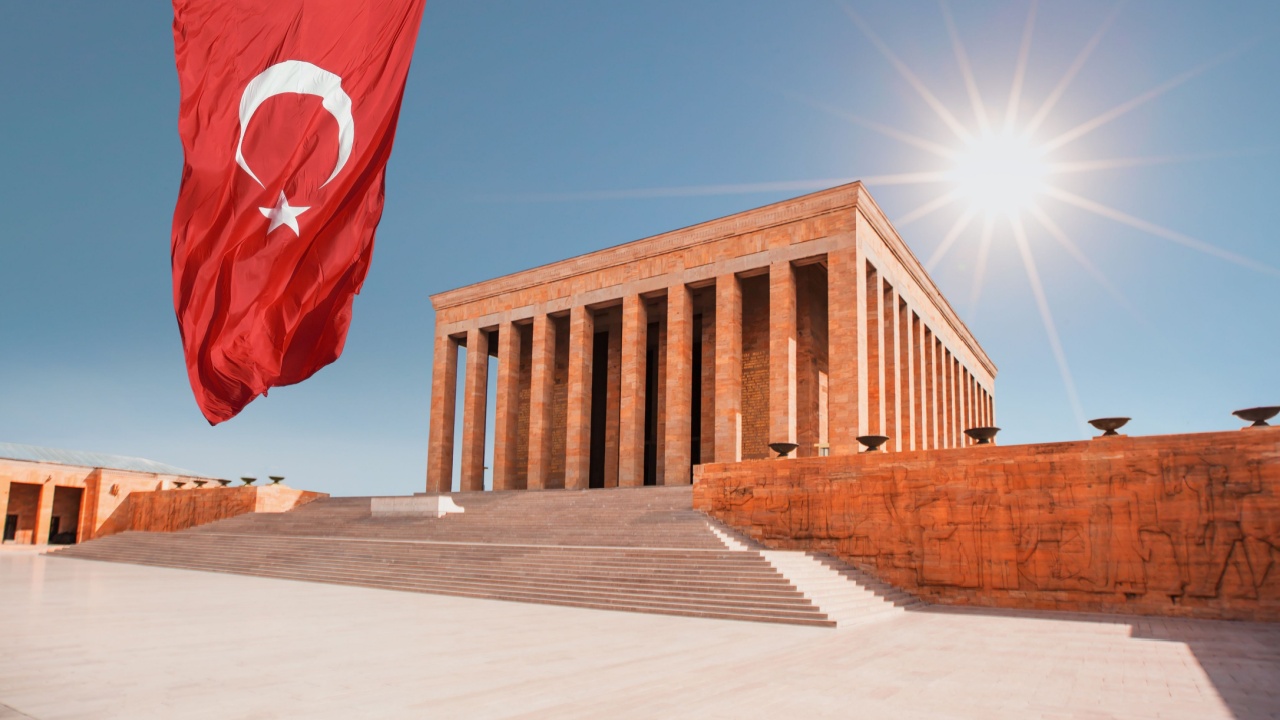
We cannot start this list without starting with Anıtkabir, the mausoleum of Mustafa Kemal Atatürk. Anıtkabir was designed by Emin Onat and Orhan Arda. Construction of the structure began 6 years after Atatürk's death and took a total of 9 years to complete. While the Hall of Honor, where Atatürk's symbolic sarcophagus is located, is located in the main section of the mausoleum, Mustafa Kemal Atatürk's real tomb is located on the lower floor of this structure. The complex is entered from the Aslanlı Yol, which leads to the ceremonial square. The Mausoleum is located on one side of the square, which is surrounded by porticoes on three sides, while the Anıtkabir Command, art galleries and museums are located in the porticoes. You can enter both Anıtkabir and the Atatürk and War of Independence Museum free of charge. You can visit Anıtkabir every day between 09:00 - 16:30 but closing hours may vary on some days. If you have the opportunity, it may be better to visit in the morning. We wish you a good trip in advance!
Atatürk Museum, Izmir
The Atatürk Museum, located in Izmir Kordon, was built as a residence by carpet merchant Takfor Efendi between 1875-1880. After its owner left the house on September 9, 1922, it was used as a headquarters by the Turkish army. This building, where Atatürk conducted his work during the Izmir Economic Congress in 1923, was purchased by the Izmir Municipality on October 13, 1926, and presented to Atatürk as a gift. From that date on, Atatürk stayed in this building every time he went to Izmir. The building was converted into the Atatürk Museum by the Izmir Municipality in 1941 after Atatürk's death. When you visit the museum, you can see the bed that Atatürk used, his library, the guest room, the study and the meeting room he used during those years. You can visit the Atatürk Museum free of charge every day of the week, between 08:30 and 19:00.
Victory Museum, Afyonkarahisar
This building was built between 1913-1914 by Mayor Esbabzade Hüseyin Tevfik Efendi to be used as a municipality building together with the Hükümet Konağı. Designed as a two-story building, it has pointed arches and cut stone windows. Used as a headquarters by Mustafa Kemal Atatürk, the chief of general staff and army commanders before the Great Offensive, this building has been converted into a museum. Currently, the museum exhibits photographs, topographic maps, defensive wires and canned goods from the War of Independence. In addition, the rooms where Atatürk, İnönü, Fevzi Çakmak and other commanders stayed are also open to visitors. You can visit the Victory Museum every weekday between 09:00 - 17:15.
Dolmabahçe Palace, Istanbul

Dolmabahçe Palace, whose construction was completed between 1843-1856, is located in Beşiktaş, Istanbul. The structure, which was not built with a single architectural approach, is a mixture of French Baroque, German Rococo, English Neoclassicism and Italian Renaissance styles. The construction of the palace began when Sultan Abdülmecid decided to build a European-style palace that would serve the purposes of residency, countryside, reception for quests and conducting state affairs, unlike classical palaces. The meticulously designed Dolmabahçe Palace has more than one architect. Garabet Amira Balyan, Abdülhalim Bey, Altunizade İsmail Zühtü Paşa, Ohannes Serveryan, Nikoğos Bey Balyan and James William Smith are the architects of Dolmabahçe Palace.
Dolmabahçe Palace has 258 rooms, 46 halls, many baths and toilets. The palace consists of three sections called Mabeyn-i Hümâyûn (Selamlık), Muayede Salonu (Ceremonial Hall) and Harem-i Hümâyûn. Dolmabahçe Palace, where Atatürk took his last breath, is currently used as a museum. In this museum, you can see Atatürk's belongings, rooms, letters and most importantly, Mustafa Kemal Atatürk's bed when he passed away. Dolmabahçe Palace is open to visitors every day between 09:00 - 17:30 except Mondays.

While you are in Istanbul to keep the memory of Atatürk and his comrades alive on August 30 Victory Day, you can also visit the Atatürk Museum in Şişli, which was planned by the War of Independence. You can plan a trip with accommodation in Istanbul to visit historical and important places. For a comfortable accommodation experience, you can evaluate Elite World İstanbul Taksim, which is very close to structures such as Dolmabahçe Palace and Atatürk Museum on the European Side.