








BLOG
- ELİTE WORLD HOTELS & RESORTS
- BLOG
- Key Considerations for Organizing an Effective Workshop
Key Considerations for Organizing an Effective Workshop

At the end of a well-structured workshop, what remains on the tables instead of scattered notes are agreed-upon decisions and actionable steps. Workshops are collaborative spaces where ideas are not merely thrown into the air and left behind, but actively shaped and finalized. Maintaining such a productive working environment through effective planning requires careful consideration of every detail—from the program schedule to venue selection.
Clarifying the Purpose and Expected Outcomes
“The answer to the question "What do we want to have clarified by the end of this workshop?" shapes many choices, including the participant profile and working method. When the core objective and expected results are defined, it becomes much easier to determine which topics fall outside the scope and when discussions should move to the next stage.
The overarching goal of a workshop is to make the most effective preparations before creating:
- Product,
- Idea,
- Project,
- Solution,
- Roadmap,
- Final work or deliverable.
In line with this overarching goal, more specific objectives that define the scope and working format of the workshop can also be established.
Bringing the Right Participants Together
One of the key elements that enhances a workshop's value is gathering diverse perspectives in the same space. Participants bringing varied knowledge and experience that contribute to the event's goals should be invited.
- Decision-makers and advisors can see the main priorities more clearly,
- Those familiar with execution can foresee potential obstacles during implementation,
- Subject matter experts and researchers can evaluate technical details,
- Representatives of direct users can express concrete expectations.
A Program Schedule and Moderation That Foster Interaction

Everyone being eager to speak at the start of a workshop does not guarantee the same level of interaction hours later. Therefore, the schedule should be structured to maximize the time participants spend reflecting, discussing, and collaborating. Following a brief opening address, group work, Q&A segments, and evaluation sessions can be planned. Schedule and break durations should also be set to prevent fatigue and sustain working momentum.
Moderation plays a decisive role in maintaining this flow. While guiding the rhythm of the workshop, the moderator assumes critical roles such as:
- Steering the discussion in line with the defined purpose,
- Enabling different participants to contribute,
- Ensuring timely transitions between sessions,
- Deepening the discussion with targeted questions when necessary,
- Highlighting differing viewpoints that emerge,
- Carrying discussed points forward to the next steps.
A Venue Suited to All Needs That Enhances Productivity
To select a space that supports workshop productivity, the following features should be considered:
- Lighting, Ventilation, and Acoustics: Adequate lighting, fresh air, and good acoustics in the hall are essential for participant comfort and sustained focus throughout the day.
- Hall Capacity: A hall suited to the group size and flexible for different seating layouts boosts the program's efficiency.
- Technical Infrastructure and Support: Technical requirements such as audio-visual systems, internet connectivity, and collaborative tools should be prepared in advance. Having an on-site technical team capable of providing prompt assistance is also crucial.
- Catering Services: A comprehensive catering service addressing various needs from coffee breaks to lunch should be offered. The variety, taste, and options suited to different dietary preferences enhance the overall quality of the event.
- Accommodation Options: Planning both accommodation and the workshop at the same venue offers distinct advantages in terms of transport and time management. Comfortable guest rooms, refined dining venues, thoughtful common areas, and an experienced team are key criteria for a quality stay.
- Break Areas: Dedicated spaces outside the meeting halls where participants can relax during breaks elevate the quality of time spent between sessions.
The Destination for Effective Workshop Organizations: Elite World Hotels & Resorts
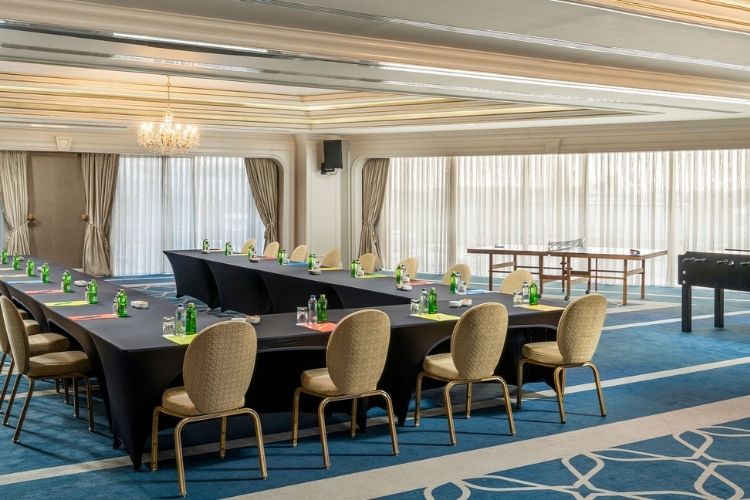
Elite World Hotels & Resorts designs meeting and event halls adaptable to gatherings of varying scales, guided by an approach centered on technology and comfort. Everything needed for every stage of a workshop—from intensive work sessions to relaxing breaks—is gathered under one roof. Spacious, comfortable halls equipped with strong technical infrastructure allow presentations, video conferencing, and digital media to run seamlessly.
Furthermore, the Business to Happiness (BtoH) concept is implemented at Elite World Grand İstanbul Küçükyalı, Elite World Grand İstanbul Basın Ekspres, and Elite World Grand Sapanca. Through this approach, we address business-oriented events alongside participants' daily needs throughout the day.
Additionally, we offer beloved spaces for taking a breather. Designed for participants to refresh their minds during breaks or at the end of the day, our Game Arena for digital gaming and rainforest-themed Botanical Garden stand out among these offerings.
You can contact Elite World Hotels & Resorts, which considers every detail of organization and accommodation on your behalf for your corporate programs, to learn more.


